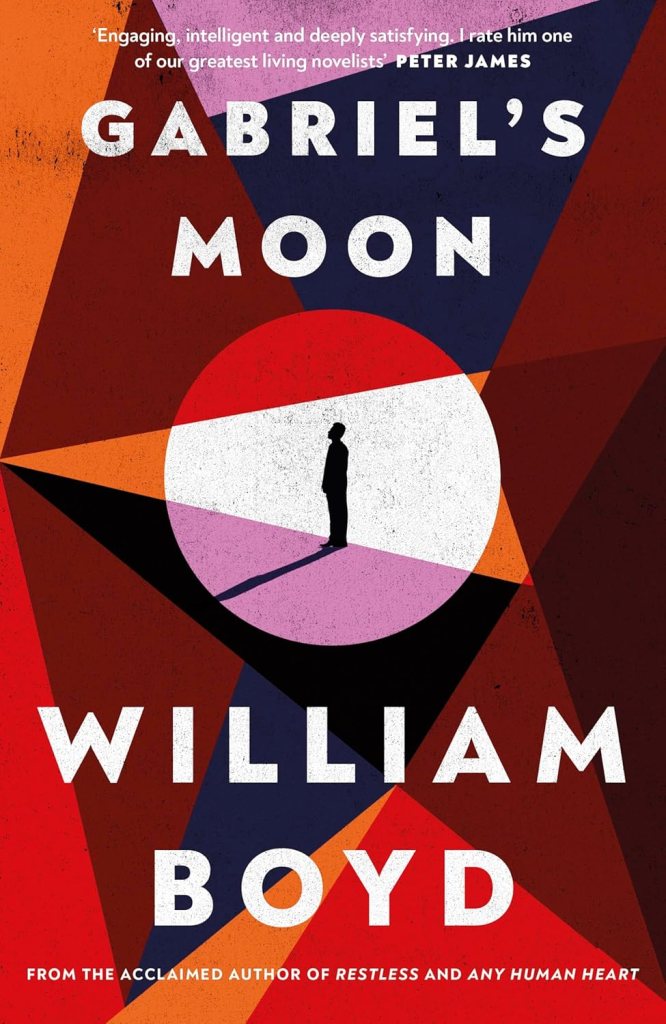
Gabriel’s Moon by Willliam Boyd and James Ellroy’s The Enchanters take place at almost the same point in his history, as America and Russia race for space and the world lurches to the brink of nuclear war. Yet to read them back-to-back, you might think they were from different planets with different languages. And in some figurative sense, I suppose, they are; those two planets being England and America. Boyd’s protagonist, Gabriel Dax, is a highly cultured, somewhat pretentious travel writer who, via his family’s connections in the corridors of power, becomes embroiled in an international espionage scandal that moves him around Europe in a permanent state of misunderstanding that also leads him to the psychoanalyst’s couch so that he may confront the trauma of his childhood: the loss of his mother in a fire at the family home. While Dax is dragged deeper into the murk of international skullduggery, there is an English upper-middle classed ‘cleanness’ to the novel which, at times, almost places the reader into a black and white movie version of the Cold War. When confronted by a CIA Agent on the upper deck of a ferry and told ‘the game is up’, Dax actually shoots, “Queneau through the pocket of his great coat, the Baby Browning making a short snappy retort like a firecracker going off.” It is Boys’ Own spy stuff: cryptic meetings in cold places, copious amounts of high-end alcohol consumed, sexy spy handlers seduced and bedded, and yes, even a villain shot through a coat pocket – that old chestnut. All meticulously penned and highly entertaining, if a little fantasist, far-fetched and Englishly clean.
So much so that rolling in the dirt of James Ellroy straight after has felt something like watching the Southbank Show before flicking to an adult-only channel. Beginning with a dubiously collared suspect thrown from a cliff-top into the nighttime traffic of the Pacific Highway, Ellroy’s reader is also hurled, unbriefed, into a deeply unsavory latrine of early sixties Hollywood dirt and gossip, seen and overheard through long-range lenses and wiretaps, as Freddy Otash (on the payroll of Jimmy Hoffa, no less) stakes out Peter Lawford’s Kennedy connection and Marilyn Monroe’s desperate last few days.
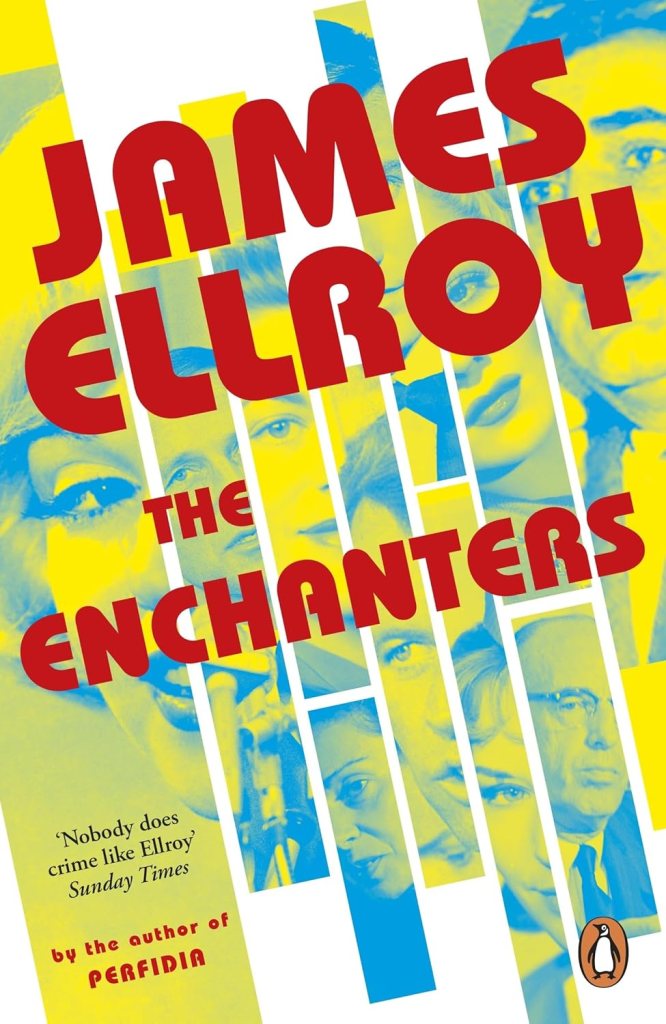
No ‘Candle in the Wind’ here, rather “the slothful living room. . . standard Monroe disarray. Let’s go case the stiff.”
To read Ellroy is to see America by Watergate torchlight as it flickers over the prone naked body of a used, abused and overdosed starlet. While Boyd’s Bond-light reluctant spy caper is fun with an easy sense of detachment, what Graham Greene might have called “an entertainment”, “The Enchanters” is full-blown Ellroy immersion, where reader bewilderment is regular par for the course and all delusion of the Hollywood myth is polluted with filth-spatter. As the quote on the cover of the paperback says, “Nobody does crime like Ellroy.” For once, the hype is quite true.
 Point Quote Comment
Leave a comment